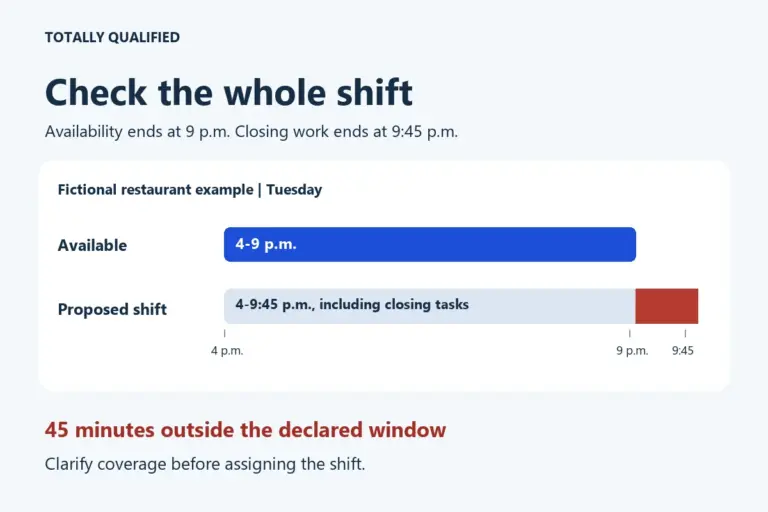
Ask restaurant candidates to explain how they check an order, communicate a delay and recover from a mistake. Then confirm that the actual shifts fit their availability. Those answers give you more to work with than asking whether someone is a “team player.”
The questions below are for owners and managers hiring hourly restaurant staff in the United States. They include follow-ups and things to listen for, so you can compare what candidates say about the work—not just how confident they sound.
Start with the job you’re actually offering
Before the interview, write down the role’s essential tasks, expected shifts, pay and training you can provide. If those details are still vague, use our restaurant job posting template to clarify them first. An interview shouldn’t introduce a completely different job from the advertisement. If candidates aren’t making it to the meeting, our guide to reducing interview no-shows for hourly jobs covers confirmations, reminders and rescheduling.
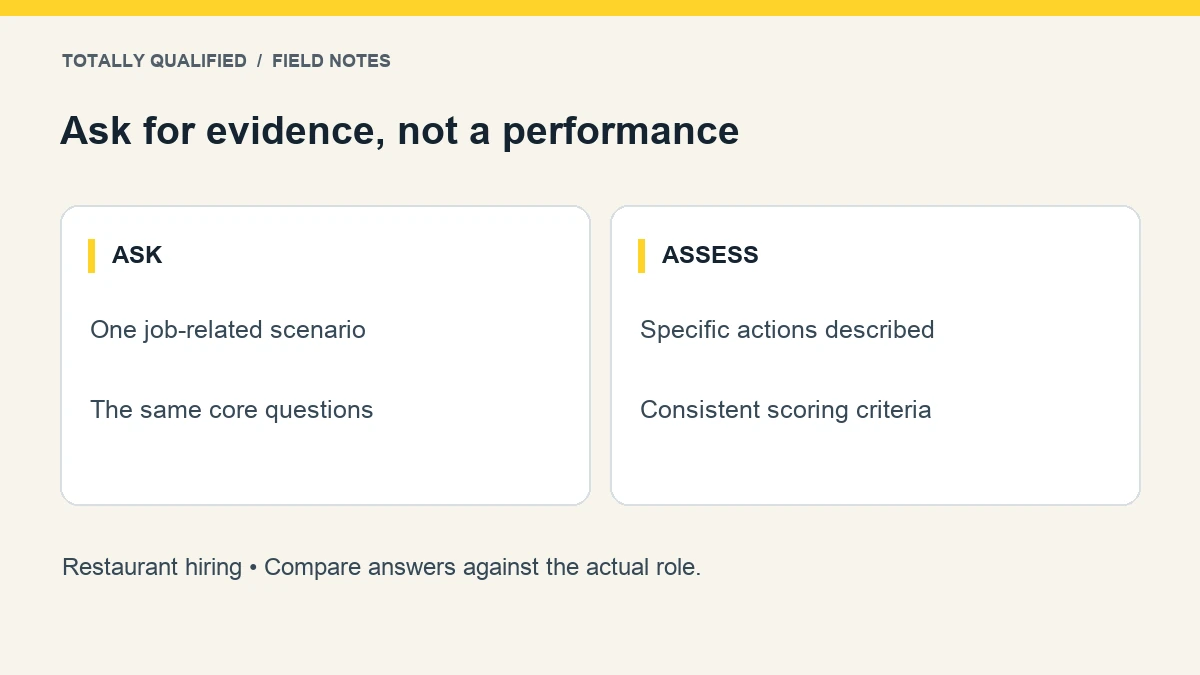
Choose the same core questions for everyone applying for that role. The U.S. Office of Personnel Management describes structured interviews as using predetermined questions and consistent evaluation standards. We’ve adapted that principle into the practical prompts below; this isn’t an OPM assessment or a validated hiring test.
Decide what you need on day one and what you’ll teach. Otherwise, it’s easy to advertise an entry-level opening and then favor whoever already knows your exact ordering system. Once someone accepts the offer, use a first-day restaurant checklist to turn those training commitments into a supervised shift plan.
Confirm the schedule and understand their experience
1. “These are the shifts we need to cover: [actual days and times]. Which can you consistently work?”
Explain closing duties and whether the finishing time varies. Ask about the required schedule rather than treating unlimited availability as a virtue. If an applicant can cover every advertised shift, their inability to work an unrelated morning shouldn’t become an invented requirement.
Keep the conversation on availability. The EEOC advises against non-job-related questions about marriage, children and childcare arrangements. You need to know whether someone can work the shift, not how their household is organized. This guide doesn’t cover every federal, state or local hiring rule.
2. “Pick one responsibility from your last job. Walk me through how you handled it from start to finish.”
A candidate might describe opening a station, checking takeout orders or handing over a cash drawer. Follow with, “Which parts were yours, and when did you involve someone else?” Listen for a clear sequence and honest limits on responsibility.
For applicants without paid experience, invite an example from school, volunteering or another relevant activity. You’re looking for evidence they can organize work and explain their actions. A restaurant name on a resume isn’t the only place to find it.
Use two situations from a real shift
3. “You’re entering an order and notice that one request isn’t clear. What would you do before sending it through?”
For a server or counter role, listen for clarification and accurate communication rather than guessing to save a few seconds. Ask, “What would you check, and with whom?” Don’t expect a newcomer to know your screen layout or abbreviations.
For a kitchen opening, replace this with an unclear ticket or instruction. Give candidates the same background information. A scenario should test how they approach uncertainty, not whether they can read the interviewer’s mind.
4. “An order is taking longer than expected, another guest needs help and a teammate asks you for something. Talk me through your first steps.”
Let the candidate ask clarifying questions. There isn’t one sequence that fits every restaurant. Listen for how they identify what’s urgent, communicate a delay and ask for support. “I’d work faster” needs a follow-up: “What would you actually do first?”
These situations reflect work such as transmitting orders and addressing guest problems described in O*NET’s profile of waiters and waitresses. Use tasks from your own opening; don’t turn a server scenario into a requirement for an unrelated kitchen job.
Find out how they handle mistakes and feedback
5. “Tell me about a time you caught a mistake in your work. What did you do next?”
Listen for what the person noticed, who needed to know and how they helped put it right. The useful detail is their response, not how dramatic the mistake was. A small, specific example can tell you more than a polished story with no clear personal action.
If they can’t recall an example, use the same prepared hypothetical follow-up for anyone in that situation: “Suppose you realize you passed along the wrong order information. What would you do?” Don’t treat an inability to remember a story immediately as proof of dishonesty.
6. “Describe something you had to learn after someone corrected you. What changed the next time?”
A useful answer identifies both the feedback and a change in behavior. Ask for that connection if it’s missing. You don’t need someone to praise every previous manager, and a reasonable disagreement doesn’t automatically make a person difficult to train.
Finish with the handoff—and their questions
7. “Your shift is ending, but one task or customer issue is still unfinished. How would you hand it over?”
Listen for a clear explanation of what remains, who is taking responsibility and what information they need. Adapt the unfinished task to the job: an unresolved order, a restocking task or preparation for the next shift. Don’t frame the ideal answer as staying indefinitely after the scheduled shift.
8. “What would you need to know about this job before deciding whether it works for you?”
This is time for the candidate to evaluate the offer, not a hidden enthusiasm test. Be ready to explain training, scheduling, base pay, how tips work where applicable and the next hiring step. Questions about pay or time off aren’t evidence that someone won’t work hard.
Compare evidence while the conversation is fresh
Use a short note sheet with four fields: job-related skill, what the candidate said, evidence still missing, and training needed. These are editorial prompts for organizing a decision, not a formula that predicts performance.
For example, write “explained checking an unclear request with the guest before entering it” instead of “good personality.” If one interviewer praises confidence and another focuses on accuracy, compare their notes against the requirements you agreed on before meeting anyone.
Keep unanswered questions separate from negative evidence. Then decide whether a consistent follow-up would resolve the gap. No interview can guarantee attendance, teamwork or future performance; an answer is one piece of information, not proof of how every shift will go. If reference checks are your next step, use these reference check questions for hourly employees to seek specific observations about the work.
If a specific practical skill still needs checking, our guide to paid working interviews for restaurants covers a short task, clear pay arrangements and supervision before anyone starts work.
Before the applicant leaves, name the next step and give a response date you can keep.