Ask a reference what the candidate actually did, how they handled a specific work situation and what support helped them succeed. A useful call gives you examples you can compare with the job you’re filling. A quick “Would you hire them again?” doesn’t do that by itself.
For an hourly opening, focus on ordinary work: finishing tasks accurately, communicating a handoff, following procedures and responding to feedback. You don’t need a corporate leadership questionnaire to hire a counter team member or stockroom associate.
Below is a short call outline for a U.S. small business. The questions are editorial examples, not a validated assessment or a substitute for a role-specific screening process.
Before calling, decide what you need to learn
Pick two or three requirements from the actual job description. “Handles order changes accurately” is a usable requirement. “Has the right vibe” isn’t. For a beginner role, don’t quietly turn skills you promised to teach into experience requirements.
The U.S. Office of Personnel Management’s reference-checking guidance recommends structure: job-related questions, a consistent core and a common way to record and evaluate answers. That principle is useful outside federal hiring, although OPM’s agency procedures aren’t universal rules for private employers.
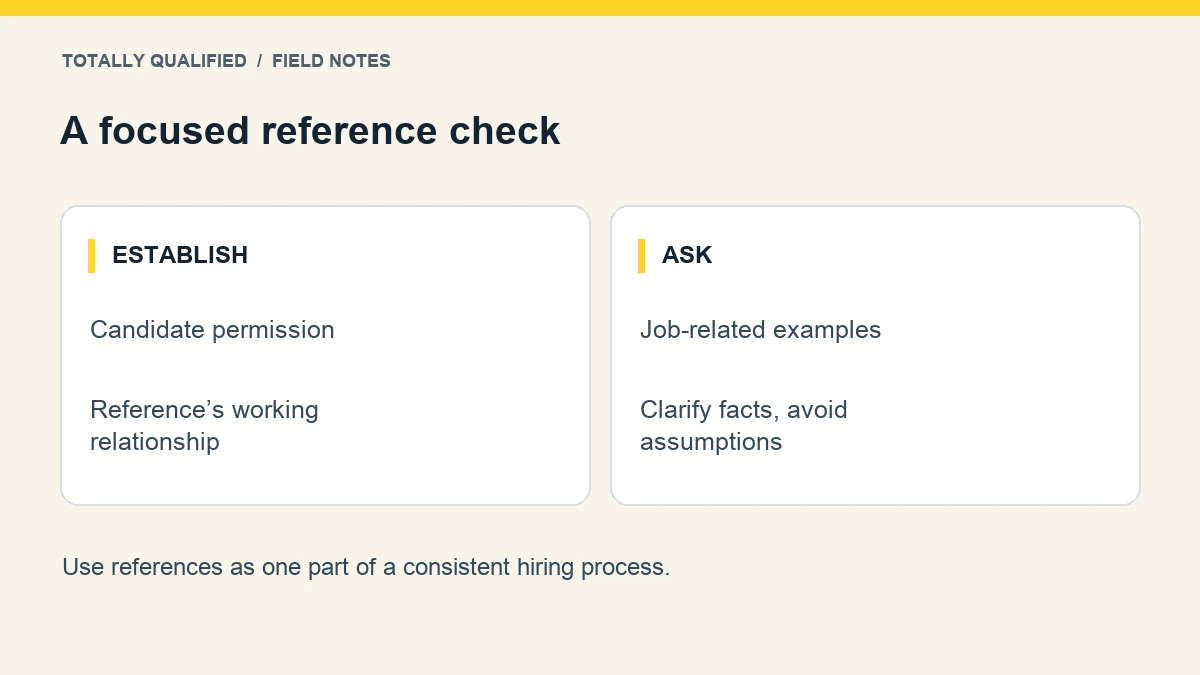
Tell the candidate whom you’d like to contact and get their permission, especially before approaching a current employer. Confirm the reference’s relationship to them and whether the person can discuss performance. A company may route you to HR for dates and title only. Accept that limit; it doesn’t tell you how well the candidate worked.
Have the job description and a blank note sheet ready. If you haven’t interviewed the candidate yet, start there. Our restaurant interview questions for employers show how to get concrete examples directly from an applicant before seeking another perspective.
A short reference call you can adapt
Open with your name, business and the role you’re filling. Ask whether it’s a convenient time. Explain that you’d like to discuss work the reference personally observed, and that it’s fine to say they don’t know or can’t answer.
1. “When did you work together, and which parts of their work did you directly see?”
A supervisor who watched daily closing duties has a different perspective from a coworker on another shift. Write down that context before judging the answers. Someone who never observed cash handling can’t meaningfully verify it.
2. “What tasks could they handle independently, and where did they need help?”
This helps separate familiarity from responsibility. A person may have assisted with inventory without owning the count. Ask for one example connected to your opening, rather than treating every limitation as a problem.
3. “Can you describe a time they caught or corrected a work error?”
For a counter role, that might concern an order. For a stockroom role, it might concern a misplaced item. Listen for what the person checked, whom they informed and what happened next. “They never made mistakes” needs clarification, not an automatic high score.
4. “How did they pass unfinished work to the next person? Can you give an example?”
A handoff can reveal useful detail about communication. Did they identify the outstanding task and make sure someone understood it? Keep the question about the work, not whether they always stayed beyond their scheduled hours.
5. “What happened after you gave them feedback on a task?”
Look for a specific adjustment, or a clear explanation of what remained difficult. You aren’t testing whether they agreed with every manager. A reasonable disagreement and a failure to follow a necessary procedure aren’t the same thing.
6. “For this role, what should their next supervisor explain clearly during training?”
Briefly describe your actual duties before asking. The answer may suggest a training need, a mismatch or nothing the reference can reliably assess. Don’t ask the person to predict success in a job they don’t understand.
You can finish by asking whether there’s another job-related point you’ve missed. Keep the core questions consistent for comparable candidates, while using follow-ups to clarify what was actually said.
Don’t turn a reference check into a personal investigation
The EEOC explains that pre-offer limits on disability questions and restrictions on genetic information apply to reference checks too. Asking a former supervisor instead of the applicant doesn’t avoid those rules. Don’t ask about diagnoses, medication, workers’ compensation claims or family medical history.
Keep marriage, children, religion and other non-job-related personal matters out of the conversation. Ask the applicant about the actual schedule you need covered; a reference isn’t the right person to investigate their household arrangements. Don’t request salary history as part of this outline. Rules vary by location, and previous pay isn’t needed to discuss the work examples above.
There is also a difference between making your own reference call and buying a screening report. The EEOC and FTC’s employer guidance explains that reports from a company that compiles background information bring additional Fair Credit Reporting Act requirements, including notices, permission and procedures before certain adverse decisions. Don’t assume a vendor’s reference product is exempt because it isn’t called a criminal background check. Review applicable federal, state and local rules for your process.
How to read an incomplete or cautious answer
“We only confirm employment dates” means the reference isn’t providing a performance assessment. A pause may mean they’re remembering, checking a policy or choosing their words. Neither is proof of a hidden problem.
If you ask about rehire eligibility, clarify what the answer means. A company policy and a firsthand account of poor work are different kinds of information. Don’t reduce the whole call to one yes-or-no label.
A first-time applicant may have a teacher or volunteer supervisor rather than a former manager. Ask what that person directly observed and recognize the limits. A school reference can discuss completing a project; it can’t verify experience with your point-of-sale system.
When an answer conflicts with the application, record the specific discrepancy and seek clarification through a consistent process. An approximate date and an invented job responsibility deserve different follow-up. Don’t present your interpretation as a confirmed fact.
Write the evidence down, then make the decision
Use four fields: requirement, observed example, source’s relationship and unresolved question. “Described checking counts against the list before handing over” is more useful than “seems dependable.” Keep missing information separate from negative evidence.
Virginia Tech’s reference-checking guidance emphasizes job-related questions and sharing reference information only with people who have a business need to know. Keep your hiring notes in a restricted place, not a team chat. Follow the record-retention requirements that apply to your business.
Compare the call with the interview and the actual requirements. A reference is one source of evidence, not a guarantee of future performance. If you hire the person, use relevant training observations to plan the first shifts rather than filing the notes and forgetting them.
If your decision is to proceed subject to remaining checks, our conditional job offer guide explains how to distinguish those conditions from the job terms and proposed start date.