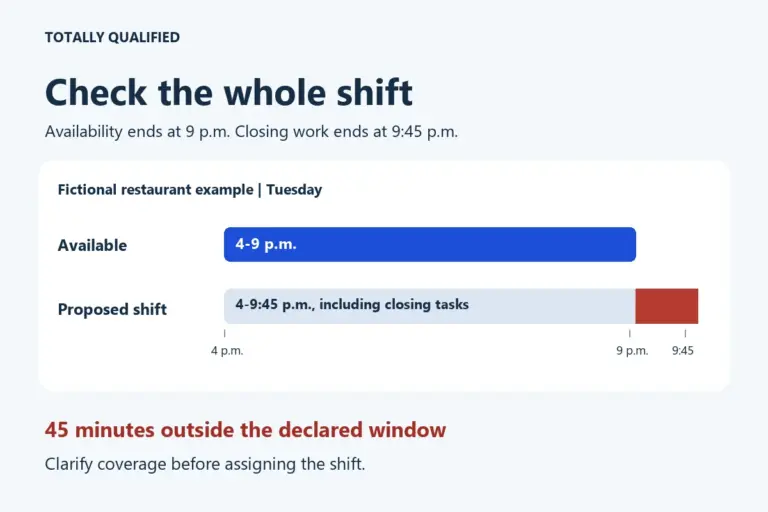
If a restaurant candidate is preparing food, serving guests, washing dishes or doing other productive work for your business during a tryout, plan to pay for that work. Calling it a “working interview” or a “stage” doesn’t, by itself, turn a shift into unpaid time.
A paid assessment can help you see how someone responds to instructions. It should be a short, supervised evaluation with clear expectations—not a way to cover a staffing gap. This guide is for U.S. restaurant owners and managers planning that process, rather than a substitute for advice about their particular state or business.
Separate an interview from productive work
The Labor Department’s hours-worked guidance explains that work an employer allows or requires can be compensable, and that job-related training isn’t automatically unpaid. Don’t assume a candidate’s agreement to a free trial resolves wage obligations.
A conversation about handling a difficult order is different from putting someone on the line to prepare customers’ meals. A tightly limited skills demonstration may raise different questions from a productive shift, but there isn’t a safe national rule that “anything under two hours is free.”
For example, California’s DLSE enforcement manual, section 46.8, discusses noncompensable tryout time only where it tests skills rather than trains, provides no productivity to the employer and is reasonable in duration. That is California guidance, not a blanket exemption for restaurants across the country.
For a practical hiring process, keep ordinary interviews as interviews and arrange productive assessments as paid work. Check applicable state and local requirements, including minimum wage, reporting-time pay, breaks and final-pay timing. Paying a wage doesn’t eliminate the rest of your onboarding and safety obligations.
Decide what you actually need to observe
Write down one or two job-related abilities that the conversation hasn’t resolved. Maybe you need to see how a candidate checks an order, follows a demonstrated setup or asks for clarification. If you can’t name the question you’re trying to answer, another shift of observation probably isn’t the answer.
Use restaurant interview questions with follow-ups first. You may learn what you need without asking the person to return for an additional visit.
Don’t test familiarity with your particular system if the opening promises training. A new server who asks where an item belongs may be doing exactly what you want. Decide which skills are essential at entry and which your restaurant will teach.
Put the paid arrangement in writing before arrival
Send the role, location, supervisor, planned start and finish, pay rate, payment arrangements, clothing requirements and tasks. Make clear that the assessment doesn’t guarantee an ongoing job. Complete the required hiring and payroll steps with your payroll or HR adviser before assigning work.
Here’s an original message template to adapt after checking your requirements:
We’d like to invite you to a paid assessment for our [role] opening on [assessment date], from [start] to [finish]. The rate is [rate], and payment will be handled through [process/date]. You’ll meet [supervisor] at [location]. We’ll explain and supervise [specific tasks] and leave time for your questions. This assessment doesn’t guarantee an ongoing position. Please tell us if you need information or an accommodation to participate.
Don’t fill in the payment line with “if hired.” Record actual time, including required instruction, and follow the applicable payment rules whether or not you offer the ongoing job. The DOL restaurant fact sheet is a starting point for federal restaurant wage requirements; it doesn’t replace state and local checks.
Use a controlled task, not the dinner rush
Assign one supervisor who has time to explain the task and watch it. Don’t leave a candidate with “help whoever needs you.” Avoid hazardous equipment or responsibilities for which the person hasn’t received required training or isn’t legally permitted to perform.
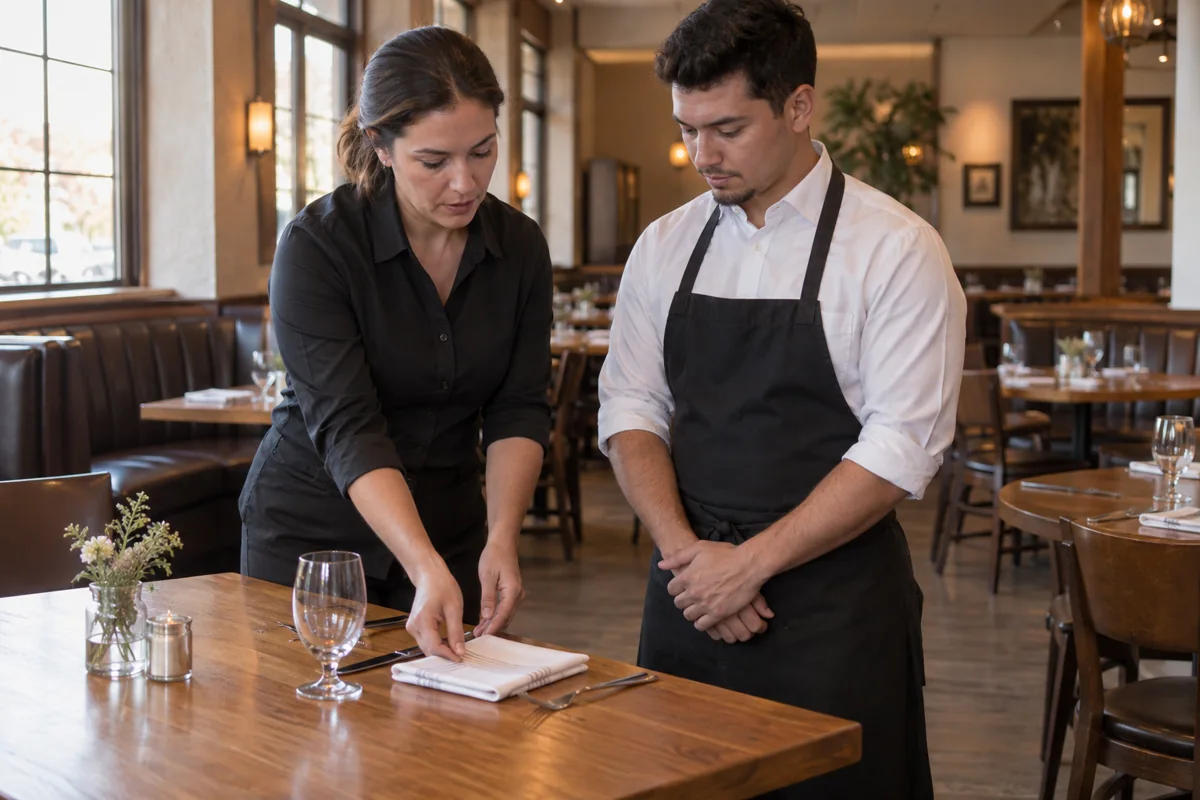
For a front-of-house role, you might demonstrate your table-reset process, then observe the candidate repeat it while explaining anything unclear. For an order-checking role, use the same prepared example for each candidate and see whether they catch a mismatch. These are suggested assessment activities, not validated tests or exemptions from pay requirements.
Keep the comparison fair: same instructions, similar conditions and the same job-related criteria. Note what happened rather than impressions such as “not our vibe.” “Checked the unclear instruction before continuing” is evidence you can discuss. “Didn’t seem confident” needs much more explanation.
If you’ve advertised no experience required, don’t penalize someone for needing the instruction you promised. Observe how they use it. Speed on an unfamiliar station is a weak substitute for accuracy, judgment and willingness to ask.
Finish with a decision process the candidate understands
At the end, confirm the time record and payment arrangements. Give a realistic response date and explain whether anything else is needed. A paid assessment should end at its planned time; don’t keep extending it because the restaurant gets busy.
Review your notes against the opening’s actual requirements. Identify what the person demonstrated, what remains unknown and what training would be needed. Don’t treat one short assessment as a guarantee of future attendance or performance.
If you make an offer, use a restaurant first-day checklist for the next shift. An assessment hasn’t replaced orientation. If you’re still recruiting, make the duties, schedule and pay clear in your restaurant job posting so candidates can decide whether the opening fits before either of you invests more time.
The point is to resolve a hiring question respectfully and consistently. If your “test” mainly produces another pair of hands for service, recognize it as work and manage it accordingly.